Algae Powered Glass: Biophotovoltaic System for Building Facades

Aug 5, 2025 By

In the quest for sustainable energy solutions, architects and scientists are turning to an unexpected ally: algae. The latest innovation in green building technology involves integrating living microorganisms into glass panels, transforming ordinary building facades into dynamic bio-photovoltaic systems. This cutting-edge approach not only generates renewable electricity but also redefines the relationship between urban infrastructure and natural ecosystems.

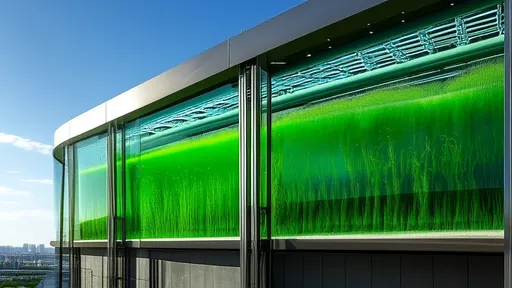
The concept of algae-powered glass builds upon decades of research into biological photovoltaic (BPV) systems. Unlike traditional solar panels that rely on silicon cells, these living panels harness the photosynthetic capabilities of microalgae to convert sunlight into usable energy. When embedded between specially designed glass layers, the algae thrive in a controlled environment while producing a small but continuous electric current through their metabolic processes.

What makes this technology revolutionary is its dual functionality. The algae-infused glass doesn't just generate electricity - it actively contributes to building temperature regulation by absorbing heat and filtering sunlight. During photosynthesis, the microorganisms naturally sequester carbon dioxide from the surrounding air, effectively turning each panel into a carbon-negative energy source. Early adopters report measurable reductions in both energy costs and the buildings' overall carbon footprint.

The engineering behind these bio-glass panels is remarkably sophisticated. Each unit contains a carefully balanced aquatic ecosystem, complete with nutrient delivery systems and waste management mechanisms. Transparent electrodes collect electrons released during algal photosynthesis, while maintaining optimal living conditions for the microorganisms. The system's designers have overcome significant technical challenges, including maintaining algal health during temperature fluctuations and preventing contamination from external organisms.

Several pilot projects across Europe and Asia demonstrate the technology's real-world potential. In Hamburg, Germany, the BIQ House became the world's first algae-powered building in 2013, featuring 129 bioreactive glass panels that cover 200 square meters of its facade. The system not only generates electricity but also produces biomass that can be harvested for additional energy production. Similar installations in Singapore and Tokyo have shown promising results in tropical climates, proving the technology's adaptability to different environmental conditions.

Architects particularly value the aesthetic possibilities of living facades. Unlike uniform solar panels, algae glass develops dynamic color variations as the microorganisms grow and multiply, creating ever-changing organic patterns across building exteriors. This biological artistry changes with seasons and weather conditions, offering a visually striking alternative to conventional building materials while performing crucial energy-generating functions.

The economic viability of algae glass continues to improve as the technology matures. While initial costs remain higher than traditional photovoltaic systems, the panels offer long-term advantages through their combined energy generation, climate control capabilities, and carbon capture potential. Manufacturers predict price parity with conventional solar solutions within the next decade as production scales up and efficiency improves through genetic engineering of specialized algal strains.

Environmental benefits extend beyond clean energy production. The algae panels contribute to urban biodiversity by creating microhabitats within their ecosystems. Some designs incorporate multiple algal species to support different functions - from maximizing energy output to filtering airborne pollutants. This biological approach to building materials represents a significant shift from energy-intensive construction components to living, breathing systems that actively improve their surroundings.

Research institutions worldwide are collaborating to enhance the technology's efficiency. Recent breakthroughs include genetically modified algae strains with enhanced photosynthetic rates and improved electron transfer capabilities. Other innovations focus on optimizing panel designs to increase light penetration while protecting the delicate microorganisms from UV damage. These continuous improvements suggest that biological photovoltaic systems may eventually surpass conventional solar technology in both performance and sustainability metrics.

The integration of living organisms into architectural elements raises fascinating questions about the future of urban environments. As buildings become more than passive structures - evolving into active participants in ecological systems - we're witnessing the emergence of truly symbiotic architecture. Algae glass represents just the beginning of this biological revolution in construction, pointing toward a future where our homes and workplaces exist in harmony with, rather than in opposition to, natural processes.

While technical challenges remain, particularly regarding large-scale implementation and maintenance requirements, the progress in algae-powered building materials signals a paradigm shift in sustainable design. As urban areas continue to expand, solutions that combine energy production, carbon sequestration, and aesthetic value will become increasingly valuable. The marriage of biology and architecture through technologies like bio-photovoltaic glass offers a compelling vision for ecologically integrated cities of the future.
Recommend Posts
Science

Migratory Quantum Compass: Magnetic Coherence State of Cryptochrome

By /Aug 5, 2025

For decades, scientists have been fascinated by the remarkable ability of migratory birds to navigate across vast distances with astonishing precision. Recent breakthroughs in quantum biology have uncovered a tantalizing clue: the involvement of cryptochromes, light-sensitive proteins in avian eyes that may function as biological quantum compasses. This discovery has opened new frontiers in our understanding of how nature harnesses quantum phenomena for biological functions.
Science

Neuromorphic Vision: Retina-Inspired Spike Encoding

By /Aug 5, 2025

The field of neuromorphic engineering has taken significant inspiration from the human visual system, particularly the retina's remarkable ability to process visual information efficiently. At the heart of this bio-inspired approach lies spike-based encoding - a revolutionary paradigm shift from traditional frame-based vision systems to event-driven neural processing.
Science

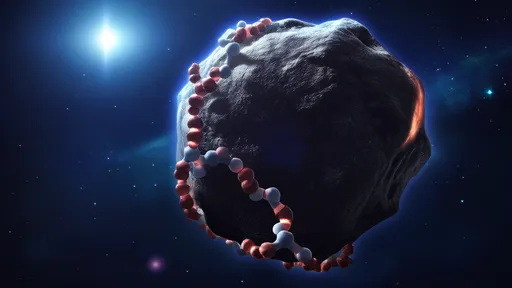
Asteroid Amino Acid Chirality: The Cosmic Bias in the Origin of Life

By /Aug 5, 2025

The discovery of amino acids in meteorites has long fascinated scientists seeking clues about the origins of life. Among the most intriguing aspects is the observed chiral bias in these extraterrestrial molecules—a phenomenon that may hold the key to understanding why life on Earth predominantly uses left-handed amino acids. This cosmic preference challenges traditional theories and opens new avenues for exploring life's universal blueprint.
Science

Acoustic Archaeology Project: Reconstructing the Dual-tone Frequencies of the Marquis Yi of Zeng's Bells

By /Aug 5, 2025

The recent advancements in acoustic archaeology have brought to light fascinating discoveries about ancient musical instruments, particularly the renowned Zeng Houyi chime bells. These artifacts, dating back to the Warring States period (475–221 BCE), represent a pinnacle of bronze metallurgy and musical engineering. Among the most intriguing aspects of these bells is their ability to produce two distinct tones, a feature that has puzzled and fascinated researchers for decades. The latest efforts in frequency restoration have shed new light on how these ancient craftsmen achieved such acoustic precision.
Science

Mathematical Epidemic Alert: Social Network Topological Propagation Model

By /Aug 5, 2025

In the dim glow of computer screens across epidemiology labs, a quiet revolution is unfolding. Researchers are mapping the invisible architecture of human interaction—not through viral swabs or antibody tests, but through the mathematical scaffolding of social networks. The emerging field of epidemic forecasting through network topology is revealing why some communities become viral tinderboxes while others dampen outbreaks through their very structure.
Science

Neolithic Anesthesia: Evidence of Papaverine Residues in Skull Surgery"

By /Aug 5, 2025

The discovery of opium residue in the teeth of a 3,000-year-old skeleton has reignited debates about prehistoric medicine. Found in a Bronze Age tomb in Spain, the remains belong to a man who underwent multiple skull surgeries—and the presence of the psychoactive compound suggests our ancestors may have used pain relief during invasive procedures. This finding challenges long-held assumptions that early surgeries were performed without anesthesia, forcing us to reconsider the sophistication of Stone Age medical practices.
Science

Neanderthal Dentistry: Primitive Resin for Tooth Decay Filling

By /Aug 5, 2025

Long before modern dentistry emerged, our ancient relatives may have been practicing rudimentary forms of dental care. Recent archaeological discoveries suggest that Neanderthals, often misunderstood as primitive brutes, might have used natural resins to fill cavities. This revelation challenges our perception of their cognitive abilities and highlights their resourcefulness in dealing with pain and infection.
Science

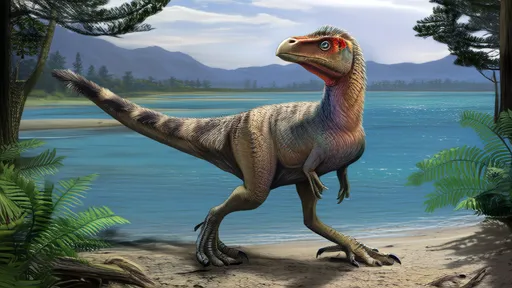
Reconstruction of Structural Color Optical Model for Dinosaur Feathers

By /Aug 5, 2025

For over two decades, paleontologists have been captivated by the idea that some dinosaurs may have sported iridescent feathers, much like modern-day birds. The discovery of melanosomes—microscopic pigment-bearing structures—in fossilized feathers has opened up a new frontier in understanding dinosaur coloration. But reconstructing the precise optical mechanisms behind these ancient hues requires more than just identifying pigments; it demands a sophisticated understanding of structural color physics. Recent breakthroughs in optical modeling are now allowing scientists to reverse-engineer the dazzling visual effects that might have adorned creatures like Microraptor or Caihong juji, bridging the gap between fossilized remnants and living brilliance.
Science

Historical Microplastics in Ice Cores: Pre-industrial Pollution Baseline

By /Aug 5, 2025

The discovery of microplastics in ancient ice cores has fundamentally altered our understanding of plastic pollution. For decades, scientists assumed that microplastic contamination was a distinctly modern phenomenon—a byproduct of post-World War II industrialization and the explosion of single-use plastics. However, recent analyses of ice cores dating back to the 18th century reveal a startling truth: microplastics have been present in the environment far longer than previously believed, forcing a dramatic reassessment of humanity’s plastic legacy.
Science

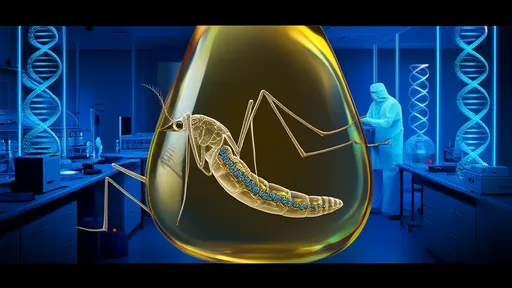
Resurrection of Amber-Encased Paleoviruses: Pathogens of Eocene Insects"

By /Aug 5, 2025

In a groundbreaking scientific endeavor, researchers have turned their attention to the ancient past, unlocking secrets buried within amber for millions of years. The discovery and potential resurrection of Eocene-era insect pathogens from amber-preserved viral libraries have opened a new frontier in paleovirology. This remarkable achievement not only sheds light on the evolutionary history of viruses but also raises profound questions about the risks and benefits of reviving ancient pathogens.
Science

DNA Cloud Storage: The World's First Biomolecular Data Center

By /Aug 5, 2025

The world of data storage is undergoing a revolutionary transformation as scientists pioneer the use of DNA as a medium for archiving digital information. In a groundbreaking development, the first-ever molecular data center dedicated to DNA-based storage has been established, marking a significant leap forward in the quest for ultra-dense, long-lasting data preservation solutions.
Science

Quantum Dot Neurofilm: Real-time Tracking of Dopamine Release

By /Aug 5, 2025

For decades, neuroscientists have grappled with the challenge of observing neurotransmitter activity in real time. The elusive dance of dopamine—a chemical messenger tied to pleasure, motivation, and disease—has remained largely invisible to conventional imaging techniques. Now, a groundbreaking fusion of nanotechnology and neuroscience is rewriting the rules of observation. Quantum dot neurocinema, an emerging imaging paradigm, is allowing researchers to capture dopamine release with unprecedented spatial and temporal resolution, effectively creating molecular-scale movies of the brain's reward system in action.
Science

Cellular Mechanics Atlas: Stress Conduction Pathways in Cancer Metastasis

By /Aug 5, 2025

The intricate dance of cellular forces has long fascinated researchers studying cancer metastasis. Recent breakthroughs in mapping the mechanical interplay between cells and their microenvironment are revealing how physical stresses propagate through biological systems, creating highways for malignant spread. At the heart of this discovery lies the mechanotransduction signaling network - a sophisticated language of push and pull that tumor cells exploit during their deadly migration.
Science

Viral Metamorphosis: Cryo-EM Captures Capsid Reorganization

By /Aug 5, 2025

In the intricate dance of viral replication, few processes are as visually stunning – or as scientifically revealing – as the structural metamorphosis of viral capsids. Recent breakthroughs in cryo-electron microscopy (cryo-EM) have allowed researchers to capture unprecedented details of these shape-shifting protein shells during critical stages of their assembly and disassembly. The findings, published across several high-profile studies, rewrite our understanding of how viruses package their genetic material and prepare for new infections.
Science

Stratospheric Wind Power Station: Helium Balloon-Tethered 20km Electricity Generation

By /Aug 5, 2025

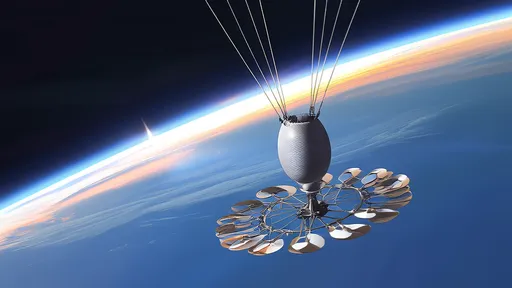
The quest for renewable energy has taken engineers to new heights—literally. In recent years, researchers have been developing ambitious systems to harness wind power from an unlikely location: the stratosphere. At altitudes around 20 kilometers above Earth's surface, a technological revolution is quietly taking shape with helium-balloon-tethered aerial wind turbines that could fundamentally change how we generate clean electricity.
Science

Femtosecond X-ray Cinema: Atomic Recording of Chemical Bond Breaking

By /Aug 5, 2025

For decades, chemists have dreamed of capturing the precise moment when chemical bonds break and reform—a process fundamental to all chemical reactions. This elusive goal has now been achieved through groundbreaking experiments using femtosecond X-ray pulses, allowing scientists to create an atomic-level "movie" of bond cleavage in real time. The implications for understanding reaction mechanisms, catalysis, and even biological processes are profound.
Science

Transmutation Reactor: Accelerator-Driven Element Transmutation

By /Aug 5, 2025

The concept of transmuting nuclear waste has long been a tantalizing prospect for scientists and policymakers alike. The idea of converting long-lived radioactive isotopes into shorter-lived or even stable elements could revolutionize how we handle the byproducts of nuclear energy. Among the most promising technologies in this field is the accelerator-driven subcritical system (ADS), a hybrid machine that combines particle accelerators with nuclear reactors to achieve controlled element transmutation.
Science

Algae Powered Glass: Biophotovoltaic System for Building Facades

By /Aug 5, 2025

In the quest for sustainable energy solutions, architects and scientists are turning to an unexpected ally: algae. The latest innovation in green building technology involves integrating living microorganisms into glass panels, transforming ordinary building facades into dynamic bio-photovoltaic systems. This cutting-edge approach not only generates renewable electricity but also redefines the relationship between urban infrastructure and natural ecosystems.
Science

Tidal Lens Focusing: Energy Multiplication through Coastal Topography Resonance

By /Aug 5, 2025

The rhythmic dance of tides has long fascinated coastal communities and scientists alike, but recent research reveals a phenomenon that transcends mere lunar attraction. Along certain stretches of coastline, the interplay between underwater topography and tidal forces creates what physicists are calling "tidal lensing" – a natural amplification system where energy doesn’t just ebb and flow, but resonates with the landscape itself.
Science

Geothermal-Photovoltaic Symbiosis: Photothermal Cogeneration in Oilfield Abandoned Wells

By /Aug 5, 2025

The global energy transition has created an unexpected opportunity in the most unlikely of places - abandoned oil wells. As the world shifts toward renewable energy, researchers and energy companies are discovering that these dormant industrial relics may hold the key to a novel form of clean power generation through geothermal-photovoltaic (GPV) symbiotic systems.