For decades, chemists have dreamed of capturing the precise moment when chemical bonds break and reform—a process fundamental to all chemical reactions. This elusive goal has now been achieved through groundbreaking experiments using femtosecond X-ray pulses, allowing scientists to create an atomic-level "movie" of bond cleavage in real time. The implications for understanding reaction mechanisms, catalysis, and even biological processes are profound.
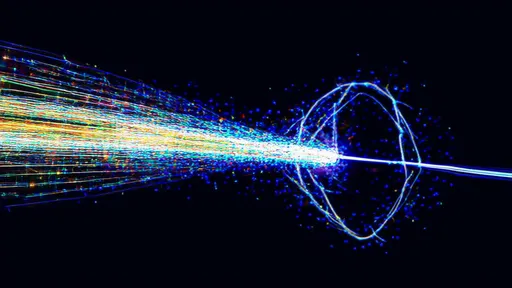
The experiments, conducted at state-of-the-art X-ray free-electron laser facilities, represent a triumph of both technology and theoretical chemistry. By firing ultrashort X-ray pulses lasting mere femtoseconds (quadrillionths of a second) at reacting molecules, researchers can essentially freeze-frame the rapid dance of electrons and nuclei during bond rupture. What emerges isn't a blurry snapshot but a crisp sequence showing electron density redistribution and atomic positions changing as bonds break.
At the heart of this breakthrough lies the ability to track both the electronic and structural changes simultaneously. Traditional techniques could either resolve atomic positions (through methods like electron diffraction) or probe electronic states (via spectroscopy), but never both with femtosecond precision during an ongoing reaction. The new X-ray approach combines scattering and spectroscopic information, revealing how electron clouds distort before atomic positions significantly shift—a crucial insight into the bond-breaking sequence.
One particularly revealing study focused on a model organometallic compound where a metal-carbon bond ruptures under light excitation. The X-ray movie showed something surprising: the bond doesn't simply snap cleanly. First, the electron density between the metal and carbon atoms becomes delocalized over the entire molecule. Then, as the bond weakens, the molecular framework distorts dramatically, with surrounding atoms moving to accommodate the impending separation. Only after these preparatory changes does the bond finally break, with the carbon fragment recoiling away.
These observations challenge simplistic textbook depictions of bond cleavage as instantaneous events. Instead, they reveal a complex choreography where electronic and nuclear motions occur on comparable timescales but follow different sequences depending on the molecular environment. The data suggests that solvent molecules or neighboring functional groups can significantly influence the bond-breaking pathway by stabilizing certain transition states.
Beyond fundamental insights, the technique opens new avenues for controlling chemical reactions. By identifying the precise timing of key events in the bond-breaking process, scientists might design tailored laser pulses to intervene at critical moments—perhaps steering reactions toward desired products or preventing unwanted byproducts. This could revolutionize fields from pharmaceutical synthesis to energy storage materials development.
The methodology's impact extends to biological systems as well. Researchers are already planning studies on enzyme active sites, hoping to capture the transient states during catalytic bond cleavage that have long eluded characterization. Understanding these processes at atomic resolution could inform drug design targeting specific enzymatic steps or guide the engineering of artificial enzymes.
Technical challenges remain, of course. The extremely bright X-ray pulses required can damage samples through multiple ionization events, complicating data interpretation. New detector technologies and analysis methods are being developed to extract cleaner signals from these destructive measurements. Additionally, theorists are working closely with experimentalists to develop more sophisticated models that can accurately simulate the observed femtosecond-scale dynamics.
As the technique matures, scientists anticipate being able to track even more complex reactions—perhaps entire catalytic cycles or consecutive bond-breaking and bond-forming events. Some groups are exploring combinations with electron diffraction or infrared spectroscopy to gain additional dimensions of information. The ultimate goal is a comprehensive, real-time visualization of chemical transformations from initial excitation through final product formation.
This achievement stands as a testament to decades of advances in laser science, X-ray technology, and quantum chemistry. From early gas-phase studies with nanosecond resolution to today's solution-phase femtosecond movies, each technical leap has revealed new layers of complexity in chemical dynamics. What once seemed like science fiction—watching molecules transform bond by bond—has become reality, promising to reshape our understanding of chemistry at its most fundamental level.
By /Aug 5, 2025

By /Aug 5, 2025
By /Aug 5, 2025

By /Aug 5, 2025
By /Aug 5, 2025

By /Aug 5, 2025

By /Aug 5, 2025

By /Aug 5, 2025

By /Aug 5, 2025
By /Aug 5, 2025

By /Aug 5, 2025
By /Aug 5, 2025
By /Aug 5, 2025

By /Aug 5, 2025

By /Aug 5, 2025
By /Aug 5, 2025

By /Aug 5, 2025

By /Aug 5, 2025

By /Aug 5, 2025

By /Aug 5, 2025