The discovery of opium residue in the teeth of a 3,000-year-old skeleton has reignited debates about prehistoric medicine. Found in a Bronze Age tomb in Spain, the remains belong to a man who underwent multiple skull surgeries—and the presence of the psychoactive compound suggests our ancestors may have used pain relief during invasive procedures. This finding challenges long-held assumptions that early surgeries were performed without anesthesia, forcing us to reconsider the sophistication of Stone Age medical practices.
Archaeologists have long puzzled over trepanation—the practice of drilling or scraping holes into the skull—which dates back at least 7,000 years. Survival rates estimated from healed bone edges show many patients lived years after these operations. But how did they endure the agony? The Spanish skeleton, with its telltale dental deposits, provides the first physical evidence that opium may have been the answer. Chemical analysis revealed morphine and codeine derivatives locked in the tooth tartar, substances only found in the opium poppy.
Not Just Ritual: Medical Intent Behind Ancient Drilling
While some researchers dismissed trepanation as purely ritualistic, the positioning of holes tells a different story. Many cluster around fracture sites or areas showing signs of infection, suggesting therapeutic intent. The Spanish specimen had three separate trepanations near a cranial injury, with bone regrowth indicating the procedures were spaced months apart. This pattern of repeated intervention mirrors modern surgical approaches to traumatic brain injuries—hardly the mark of primitive superstition.
The opium connection adds weight to the medical hypothesis. Poppies grew wild across Neolithic Europe, and ceramic vessels from the period often bear poppy-shaped decorations. Earlier finds of poppy-seed capsules in Swiss lake dwellings hinted at their use, but the dental evidence proves ingestion. Interestingly, the Spanish skeleton's opium levels suggest moderate, controlled dosing rather than narcotic excess—the mark of deliberate pain management rather than recreational use.
Beyond Europe: A Global Phenomenon?
Parallel discoveries are emerging worldwide. In Croatia, a 6,000-year-old female skull shows trepanation marks alongside mandible damage consistent with chewing tough poppy pods. Peruvian mummies from 2000 BCE have coca leaves placed in their cheek pouches—another ancient anesthetic. These finds suggest Stone Age peoples independently developed pharmacological solutions to surgical pain across continents.
The implications rewrite medical history. Rather than viewing early surgeons as butchers operating on conscious patients, we must now imagine them as knowledgeable practitioners with an understanding of botanicals' analgesic properties. Their survival rates, comparable to 18th-century European hospitals, suddenly make sense. Perhaps Hippocrates wasn't the father of medicine—just one inheritor of a much older tradition.
Chemical Time Capsules: What Teeth Reveal
Modern analytical techniques made this breakthrough possible. Laser-ablation mass spectrometry can detect drug metabolites trapped in dental calculus—the mineralized plaque that outlasts bones. The Spanish team analyzed 0.2mg samples, identifying alkaloids at parts-per-billion concentrations. This method opens new avenues for studying ancient drug use, from nicotine in Native American remains to cannabis traces along the Silk Road.
Critically, the opium wasn't evenly distributed in the Spanish skeleton's teeth. It concentrated in growth rings corresponding to the surgical periods, creating a chemical timeline. The highest doses aligned with his first trepanation, tapering off during later procedures—possibly indicating reduced pain as the injury healed or developed tolerance. Such nuance suggests sophisticated dosing strategies passed down through generations of healers.
The Dark Side: Addiction in Antiquity?
Not all evidence points to controlled medical use. At a 5,000-year-old burial site in Germany, archaeologists found a mass grave with skeletons showing both trepanations and abnormally worn teeth—a hallmark of chewing fibrous poppy straw. The individuals died young, their bones riddled with signs of malnutrition. This grim find hints at addiction's ancient roots, showing how pain relief could spiral into dependency even in prehistoric societies.
Ethnographic parallels exist. The Greek goddess Demeter was said to have created the poppy to ease her sorrow, while Sumerian tablets from 3400 BCE describe "joy plants" used medicinally. By the Bronze Age, opium trade routes stretched from Cyprus to Egypt. The Spanish skeleton may represent an early phase of this trajectory—when poppies still occupied a sacred, medicinal niche before becoming commodities.
Rethinking Prehistoric Suffering
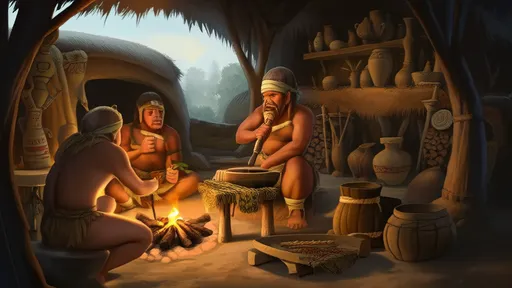
These findings humanize our ancestors in unexpected ways. The Spanish man likely experienced weeks of throbbing pain from his head injury before seeking help. His healers—perhaps clan elders or shamans—would have debated whether to operate. Preparing the poppy extract, they might have chanted prayers while measuring doses in shell cups. The patient, drifting into narcotic haze, would have heard the sound of stone scraping bone as darkness took him.
That anyone survived such ordeals testifies to Stone Age medical knowledge lost to time. Unlike modern anesthesia developed in laboratories, their solutions emerged from intimate observation of nature's pharmacy. As we uncover more chemical traces in ancient remains, we may find that pain management—like toolmaking or fire—was a fundamental pillar of early human culture, born from compassion as much as necessity.
By /Aug 5, 2025

By /Aug 5, 2025
By /Aug 5, 2025
By /Aug 5, 2025

By /Aug 5, 2025
By /Aug 5, 2025

By /Aug 5, 2025

By /Aug 5, 2025

By /Aug 5, 2025
By /Aug 5, 2025

By /Aug 5, 2025
By /Aug 5, 2025
By /Aug 5, 2025

By /Aug 5, 2025

By /Aug 5, 2025

By /Aug 5, 2025

By /Aug 5, 2025

By /Aug 5, 2025

By /Aug 5, 2025

By /Aug 5, 2025