Neuromorphic Vision: Retina-Inspired Spike Encoding

Aug 5, 2025 By

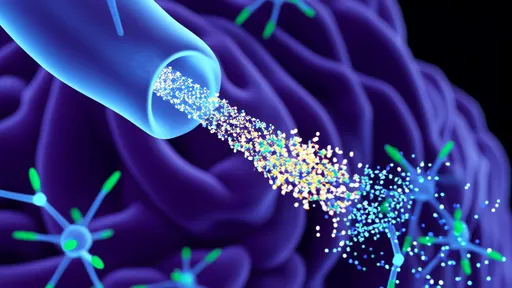
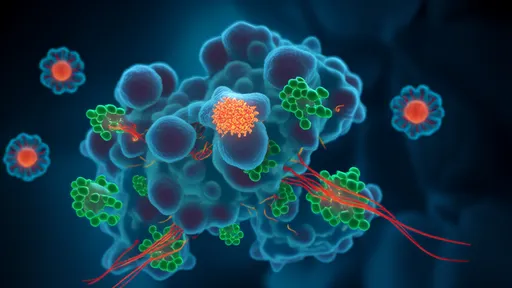
The field of neuromorphic engineering has taken significant inspiration from the human visual system, particularly the retina's remarkable ability to process visual information efficiently. At the heart of this bio-inspired approach lies spike-based encoding - a revolutionary paradigm shift from traditional frame-based vision systems to event-driven neural processing.

Retinal Processing as Biological Blueprint

Biological retinas don't simply capture and transmit raw pixel data to the brain. Instead, they perform sophisticated preprocessing through layered neural networks where photoreceptors connect to bipolar cells, which in turn synapse with retinal ganglion cells. This complex circuitry extracts spatially and temporally relevant features before converting them into spike trains - the brain's native information currency. The retina's ability to compress visual data by several orders of magnitude while preserving critical information has become a gold standard for neuromorphic vision systems.

Recent advances in neuroscience have revealed that retinal ganglion cells employ diverse encoding strategies. Some cells fire spikes at precise temporal patterns when detecting specific features (temporal coding), while others rely on relative spike timing across neural populations (population coding). This multi-layered encoding scheme allows the visual system to maintain high information throughput despite the limited bandwidth of the optic nerve.

From Biology to Silicon

Engineers have developed various electronic implementations of retinal processing. Address-event representation (AER) stands out as one of the most successful bio-inspired communication protocols for neuromorphic vision sensors. In AER systems, pixels operate independently and asynchronously, generating events (spikes) only when detecting meaningful luminance changes. This approach mirrors the retina's sparse, event-driven communication strategy.

Modern retina-inspired vision sensors like dynamic vision sensors (DVS) demonstrate several advantages over conventional cameras. Their microsecond temporal resolution, 120dB dynamic range, and negligible motion blur make them ideal for applications requiring fast, reliable vision in variable lighting conditions. Unlike traditional cameras that waste resources capturing and processing redundant background information, neuromorphic sensors only transmit relevant visual changes, dramatically reducing power consumption and computational overhead.

The Spike Encoding Revolution

At the core of neuromorphic vision lies the transformation of visual information into spike patterns. Various encoding schemes have emerged, each with distinct advantages. Rate coding, where information is carried in spike frequency, offers simplicity and noise robustness. Temporal coding, relying on precise spike timing, provides higher bandwidth efficiency. Population coding, distributing information across neuron groups, enables robust representation of complex stimuli.

Advanced encoding models now incorporate adaptive mechanisms observed in biological retinas. These include contrast gain control, which adjusts sensitivity based on ambient light levels, and predictive coding, where the retina anticipates expected patterns to suppress redundant spikes. Such features allow artificial systems to maintain performance across diverse environments while conserving energy.

Applications and Future Directions

Neuromorphic vision sensors are finding applications in autonomous vehicles, robotics, and surveillance systems where low latency and power efficiency are critical. In automotive applications, they enable collision avoidance systems that react orders of magnitude faster than conventional cameras. For mobile robotics, they provide vision capabilities that consume milliwatts rather than watts of power.

The next frontier involves integrating these sensors with spiking neural networks that mimic higher visual processing in the brain. Researchers are developing hierarchical systems where early layers perform retina-like feature extraction while deeper layers implement cortical processing. Such complete neuromorphic pipelines promise to revolutionize computer vision by achieving biological-level efficiency and robustness.

Challenges remain in scaling these technologies and improving their programmability. Current retina-inspired chips often implement fixed encoding schemes, while biological systems continuously adapt their processing based on task requirements. Future generations of neuromorphic vision systems will likely incorporate more plasticity and learning capabilities at the sensor level itself.

As the field progresses, we're witnessing a convergence of neuroscience, computer vision, and low-power electronics. The retina's elegant solutions to vision challenges, refined over millions of years of evolution, continue to inspire technological breakthroughs that may ultimately lead to artificial vision systems rivaling their biological counterparts in efficiency and capability.
Recommend Posts
Science

Migratory Quantum Compass: Magnetic Coherence State of Cryptochrome

By /Aug 5, 2025

For decades, scientists have been fascinated by the remarkable ability of migratory birds to navigate across vast distances with astonishing precision. Recent breakthroughs in quantum biology have uncovered a tantalizing clue: the involvement of cryptochromes, light-sensitive proteins in avian eyes that may function as biological quantum compasses. This discovery has opened new frontiers in our understanding of how nature harnesses quantum phenomena for biological functions.
Science

Neuromorphic Vision: Retina-Inspired Spike Encoding

By /Aug 5, 2025

The field of neuromorphic engineering has taken significant inspiration from the human visual system, particularly the retina's remarkable ability to process visual information efficiently. At the heart of this bio-inspired approach lies spike-based encoding - a revolutionary paradigm shift from traditional frame-based vision systems to event-driven neural processing.
Science

Asteroid Amino Acid Chirality: The Cosmic Bias in the Origin of Life

By /Aug 5, 2025

The discovery of amino acids in meteorites has long fascinated scientists seeking clues about the origins of life. Among the most intriguing aspects is the observed chiral bias in these extraterrestrial molecules—a phenomenon that may hold the key to understanding why life on Earth predominantly uses left-handed amino acids. This cosmic preference challenges traditional theories and opens new avenues for exploring life's universal blueprint.
Science

Acoustic Archaeology Project: Reconstructing the Dual-tone Frequencies of the Marquis Yi of Zeng's Bells

By /Aug 5, 2025

The recent advancements in acoustic archaeology have brought to light fascinating discoveries about ancient musical instruments, particularly the renowned Zeng Houyi chime bells. These artifacts, dating back to the Warring States period (475–221 BCE), represent a pinnacle of bronze metallurgy and musical engineering. Among the most intriguing aspects of these bells is their ability to produce two distinct tones, a feature that has puzzled and fascinated researchers for decades. The latest efforts in frequency restoration have shed new light on how these ancient craftsmen achieved such acoustic precision.
Science

Mathematical Epidemic Alert: Social Network Topological Propagation Model

By /Aug 5, 2025

In the dim glow of computer screens across epidemiology labs, a quiet revolution is unfolding. Researchers are mapping the invisible architecture of human interaction—not through viral swabs or antibody tests, but through the mathematical scaffolding of social networks. The emerging field of epidemic forecasting through network topology is revealing why some communities become viral tinderboxes while others dampen outbreaks through their very structure.
Science

Neolithic Anesthesia: Evidence of Papaverine Residues in Skull Surgery"

By /Aug 5, 2025

The discovery of opium residue in the teeth of a 3,000-year-old skeleton has reignited debates about prehistoric medicine. Found in a Bronze Age tomb in Spain, the remains belong to a man who underwent multiple skull surgeries—and the presence of the psychoactive compound suggests our ancestors may have used pain relief during invasive procedures. This finding challenges long-held assumptions that early surgeries were performed without anesthesia, forcing us to reconsider the sophistication of Stone Age medical practices.
Science

Neanderthal Dentistry: Primitive Resin for Tooth Decay Filling

By /Aug 5, 2025

Long before modern dentistry emerged, our ancient relatives may have been practicing rudimentary forms of dental care. Recent archaeological discoveries suggest that Neanderthals, often misunderstood as primitive brutes, might have used natural resins to fill cavities. This revelation challenges our perception of their cognitive abilities and highlights their resourcefulness in dealing with pain and infection.
Science

Reconstruction of Structural Color Optical Model for Dinosaur Feathers

By /Aug 5, 2025

For over two decades, paleontologists have been captivated by the idea that some dinosaurs may have sported iridescent feathers, much like modern-day birds. The discovery of melanosomes—microscopic pigment-bearing structures—in fossilized feathers has opened up a new frontier in understanding dinosaur coloration. But reconstructing the precise optical mechanisms behind these ancient hues requires more than just identifying pigments; it demands a sophisticated understanding of structural color physics. Recent breakthroughs in optical modeling are now allowing scientists to reverse-engineer the dazzling visual effects that might have adorned creatures like Microraptor or Caihong juji, bridging the gap between fossilized remnants and living brilliance.
Science

Historical Microplastics in Ice Cores: Pre-industrial Pollution Baseline

By /Aug 5, 2025

The discovery of microplastics in ancient ice cores has fundamentally altered our understanding of plastic pollution. For decades, scientists assumed that microplastic contamination was a distinctly modern phenomenon—a byproduct of post-World War II industrialization and the explosion of single-use plastics. However, recent analyses of ice cores dating back to the 18th century reveal a startling truth: microplastics have been present in the environment far longer than previously believed, forcing a dramatic reassessment of humanity’s plastic legacy.
Science

Resurrection of Amber-Encased Paleoviruses: Pathogens of Eocene Insects"

By /Aug 5, 2025

In a groundbreaking scientific endeavor, researchers have turned their attention to the ancient past, unlocking secrets buried within amber for millions of years. The discovery and potential resurrection of Eocene-era insect pathogens from amber-preserved viral libraries have opened a new frontier in paleovirology. This remarkable achievement not only sheds light on the evolutionary history of viruses but also raises profound questions about the risks and benefits of reviving ancient pathogens.
Science

DNA Cloud Storage: The World's First Biomolecular Data Center

By /Aug 5, 2025

The world of data storage is undergoing a revolutionary transformation as scientists pioneer the use of DNA as a medium for archiving digital information. In a groundbreaking development, the first-ever molecular data center dedicated to DNA-based storage has been established, marking a significant leap forward in the quest for ultra-dense, long-lasting data preservation solutions.
Science

Quantum Dot Neurofilm: Real-time Tracking of Dopamine Release

By /Aug 5, 2025

For decades, neuroscientists have grappled with the challenge of observing neurotransmitter activity in real time. The elusive dance of dopamine—a chemical messenger tied to pleasure, motivation, and disease—has remained largely invisible to conventional imaging techniques. Now, a groundbreaking fusion of nanotechnology and neuroscience is rewriting the rules of observation. Quantum dot neurocinema, an emerging imaging paradigm, is allowing researchers to capture dopamine release with unprecedented spatial and temporal resolution, effectively creating molecular-scale movies of the brain's reward system in action.
Science

Cellular Mechanics Atlas: Stress Conduction Pathways in Cancer Metastasis

By /Aug 5, 2025

The intricate dance of cellular forces has long fascinated researchers studying cancer metastasis. Recent breakthroughs in mapping the mechanical interplay between cells and their microenvironment are revealing how physical stresses propagate through biological systems, creating highways for malignant spread. At the heart of this discovery lies the mechanotransduction signaling network - a sophisticated language of push and pull that tumor cells exploit during their deadly migration.
Science

Viral Metamorphosis: Cryo-EM Captures Capsid Reorganization

By /Aug 5, 2025

In the intricate dance of viral replication, few processes are as visually stunning – or as scientifically revealing – as the structural metamorphosis of viral capsids. Recent breakthroughs in cryo-electron microscopy (cryo-EM) have allowed researchers to capture unprecedented details of these shape-shifting protein shells during critical stages of their assembly and disassembly. The findings, published across several high-profile studies, rewrite our understanding of how viruses package their genetic material and prepare for new infections.
Science

Stratospheric Wind Power Station: Helium Balloon-Tethered 20km Electricity Generation

By /Aug 5, 2025

The quest for renewable energy has taken engineers to new heights—literally. In recent years, researchers have been developing ambitious systems to harness wind power from an unlikely location: the stratosphere. At altitudes around 20 kilometers above Earth's surface, a technological revolution is quietly taking shape with helium-balloon-tethered aerial wind turbines that could fundamentally change how we generate clean electricity.
Science

Femtosecond X-ray Cinema: Atomic Recording of Chemical Bond Breaking

By /Aug 5, 2025

For decades, chemists have dreamed of capturing the precise moment when chemical bonds break and reform—a process fundamental to all chemical reactions. This elusive goal has now been achieved through groundbreaking experiments using femtosecond X-ray pulses, allowing scientists to create an atomic-level "movie" of bond cleavage in real time. The implications for understanding reaction mechanisms, catalysis, and even biological processes are profound.
Science

Transmutation Reactor: Accelerator-Driven Element Transmutation

By /Aug 5, 2025

The concept of transmuting nuclear waste has long been a tantalizing prospect for scientists and policymakers alike. The idea of converting long-lived radioactive isotopes into shorter-lived or even stable elements could revolutionize how we handle the byproducts of nuclear energy. Among the most promising technologies in this field is the accelerator-driven subcritical system (ADS), a hybrid machine that combines particle accelerators with nuclear reactors to achieve controlled element transmutation.
Science

Algae Powered Glass: Biophotovoltaic System for Building Facades

By /Aug 5, 2025

In the quest for sustainable energy solutions, architects and scientists are turning to an unexpected ally: algae. The latest innovation in green building technology involves integrating living microorganisms into glass panels, transforming ordinary building facades into dynamic bio-photovoltaic systems. This cutting-edge approach not only generates renewable electricity but also redefines the relationship between urban infrastructure and natural ecosystems.
Science

Tidal Lens Focusing: Energy Multiplication through Coastal Topography Resonance

By /Aug 5, 2025

The rhythmic dance of tides has long fascinated coastal communities and scientists alike, but recent research reveals a phenomenon that transcends mere lunar attraction. Along certain stretches of coastline, the interplay between underwater topography and tidal forces creates what physicists are calling "tidal lensing" – a natural amplification system where energy doesn’t just ebb and flow, but resonates with the landscape itself.
Science

Geothermal-Photovoltaic Symbiosis: Photothermal Cogeneration in Oilfield Abandoned Wells

By /Aug 5, 2025

The global energy transition has created an unexpected opportunity in the most unlikely of places - abandoned oil wells. As the world shifts toward renewable energy, researchers and energy companies are discovering that these dormant industrial relics may hold the key to a novel form of clean power generation through geothermal-photovoltaic (GPV) symbiotic systems.