In the heart of dense, untouched forests, a quiet revolution is unfolding in the field of wildlife monitoring. Gone are the days when researchers had to rely solely on visual surveys or invasive tagging methods to track elusive species. Today, bioacoustic monitoring is emerging as a powerful, non-intrusive tool that allows scientists to eavesdrop on the secret lives of forest inhabitants. By deploying passive acoustic recorders across vast and often inaccessible terrains, ecologists can now gather continuous, high-fidelity audio data, painting a vivid picture of biodiversity and ecosystem health without ever setting foot in the animals' domains.
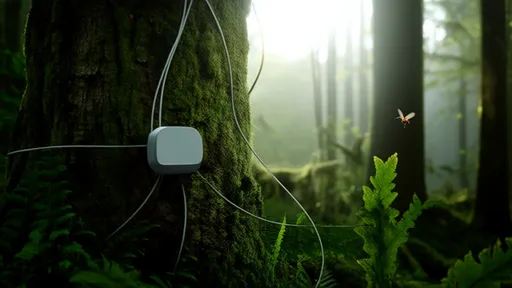
The technology behind passive acoustic monitoring is both sophisticated and elegantly simple. These recorders, often no larger than a human hand, are equipped with sensitive microphones and robust storage capabilities. They can be left in the wild for weeks or even months, programmed to capture sounds at specific intervals or triggered by ambient noise. What makes them particularly valuable is their ability to operate autonomously, weathering rain, wind, and temperature fluctuations while collecting a rich tapestry of forest sounds—from the low-frequency rumble of elephants to the high-pitched chirps of insects.
One of the most compelling applications of this technology is in tracking species that are notoriously difficult to observe directly. Take, for instance, the ocelot, a nocturnal and highly secretive feline native to Central and South American forests. Traditional camera traps might occasionally snap a blurry image, but passive acoustic recorders can capture its distinctive vocalizations—growls, meows, and scent-marking calls—allowing researchers to map its movements, estimate population density, and even understand its social structure. Similarly, in Southeast Asia, the haunting calls of Gibbons are being used to monitor family groups and assess the impact of habitat fragmentation.
But it's not just about individual species; bioacoustics provides a holistic view of the entire soundscape. Every forest has a unique acoustic fingerprint—a complex blend of biophony (sounds from animals), geophony (sounds from wind, water, and weather), and anthropophony (human-made noises). By analyzing these soundscapes, scientists can detect subtle changes over time. A sudden drop in certain frequencies might indicate the decline of a key species, while an increase in silence could signal ecological distress. In this way, passive acoustic monitoring acts as a stethoscope for the forest, listening to its heartbeat and diagnosing its ailments.
The data collected by these devices is staggering in volume and richness. A single recorder can generate terabytes of audio, presenting both an opportunity and a challenge. Manual analysis by human experts would be impossibly time-consuming, which is why machine learning algorithms are increasingly being employed. These AI systems can be trained to recognize specific animal calls, filter out background noise, and even identify new or rare vocalizations. For example, in the Amazon, researchers used AI to distinguish between the calls of over 50 bird species simultaneously, something that would have taken years to accomplish manually.
Moreover, passive acoustic monitoring is proving invaluable in conservation efforts. In areas threatened by deforestation or poaching, these recorders can serve as early warning systems. The absence of certain sounds—like the dawn chorus of birds or the nighttime activity of mammals—can alert authorities to illegal logging or hunting activities. In some projects, real-time acoustic sensors are even being linked to satellite networks, enabling instant alerts when gunshots or chainsaws are detected, allowing for rapid response.
Despite its promise, the method is not without limitations. Background noise from rain or wind can sometimes obscure animal vocalizations, and distinguishing between similar-sounding species remains a challenge. There are also ethical considerations: while non-invasive, constant audio surveillance raises questions about privacy, even in the animal kingdom. However, these hurdles are being addressed through technological refinements, such as directional microphones and advanced noise-cancellation algorithms.
Looking ahead, the future of bioacoustic monitoring is bright. Researchers are exploring the integration of acoustic data with other forms of sensing, such as thermal imaging or drone-based surveys, to create multi-dimensional models of forest ecosystems. There is also growing interest in citizen science projects, where volunteers help label audio data or even deploy their own recorders, democratizing wildlife research and engaging the public in conservation.
In conclusion, passive acoustic monitoring is transforming our understanding of forests and their inhabitants. By listening closely to the natural world, we are uncovering stories that would otherwise remain hidden— stories of migration, communication, conflict, and coexistence. As technology continues to evolve, these tiny, unassuming devices will undoubtedly play a pivotal role in safeguarding the planet's biodiversity, one sound at a time.

By /Aug 27, 2025

By /Aug 27, 2025

By /Aug 27, 2025

By /Aug 27, 2025
By /Aug 27, 2025

By /Aug 27, 2025

By /Aug 27, 2025

By /Aug 27, 2025
By /Aug 27, 2025

By /Aug 27, 2025

By /Aug 27, 2025

By /Aug 27, 2025

By /Aug 27, 2025

By /Aug 27, 2025

By /Aug 27, 2025

By /Aug 27, 2025

By /Aug 27, 2025

By /Aug 27, 2025

By /Aug 27, 2025

By /Aug 27, 2025