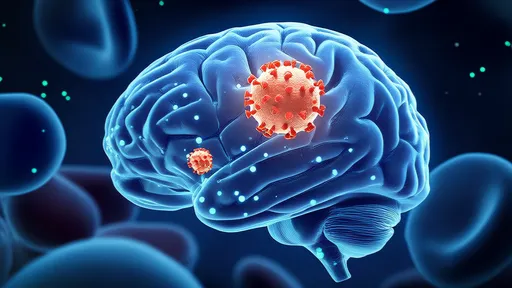
The human brain has long been regarded as a largely static organ, its intricate circuitry fixed and unchangeable after development. For decades, the central dogma of neuroscience held that we are born with all the neurons we will ever have, and that damage to the brain—whether from injury, stroke, or neurodegenerative disease—was permanent. This pessimistic view, however, is being radically overturned by a revolutionary field of research focused on cellular reprogramming, particularly the direct conversion of one cell type into another within the living brain. At the forefront of this scientific renaissance is the astonishing potential of astrocytes, the most abundant cells in the central nervous system, to be transformed directly into functional neurons, offering a beacon of hope for treating conditions once thought untreatable.
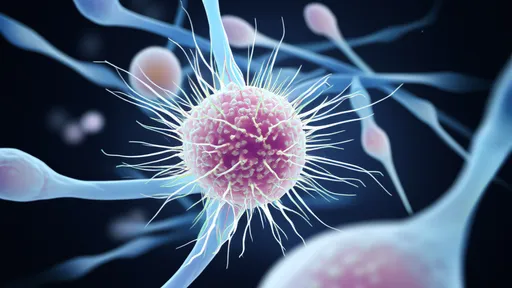
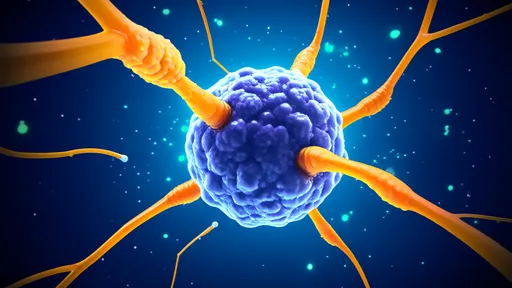
The star-shaped astrocytes, whose name derives from the Greek words for "star" and "cell," were historically relegated to a supporting role. Neuroscientists viewed them as mere housekeepers, responsible for maintaining the chemical environment around neurons, providing nutrients, and cleaning up debris. They were the stage crew, not the actors, in the dramatic performance of neural computation. This perception began to shift as research revealed their critical roles in regulating blood flow, forming the blood-brain barrier, and modulating synaptic transmission. Yet, their most profound secret—a latent potential to become something entirely different—remained hidden. The discovery that these supportive glial cells could be coerced into becoming the very cells they once supported represents a paradigm shift of monumental proportions, challenging our fundamental understanding of cellular identity and fate.
The conceptual breakthrough hinges on the work of pioneering scientists who demonstrated that cellular identity is not written in immutable stone but is rather a plastic state maintained by a specific constellation of active genes. The seminal work of Shinya Yamanaka, who showed that mature cells could be reprogrammed back to an embryonic-like state (induced pluripotent stem cells) using a cocktail of transcription factors, blew the door open. Researchers began to wonder: if you can go all the way back to the beginning, why not skip the pluripotent step and convert one mature cell type directly into another? This process, known as transdifferentiation or direct reprogramming, became the holy grail for regenerative medicine, aiming to replace lost cells without the risks of tumor formation associated with pluripotent cells.
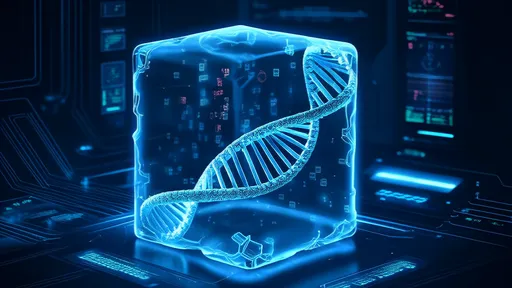
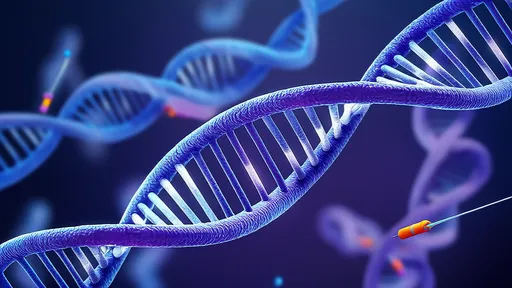
Applying this logic to the brain, scientists asked a daring question: could the abundant astrocytes that proliferate at the site of injury—forming a glial scar—be persuaded to become new neurons instead? The answer, emerging from laboratories around the world, is a resounding and exciting yes. The strategy involves introducing a specific set of neurogenic transcription factors into these astrocytes. These factors are like master switches; they forcibly alter the genetic program running inside the astrocyte, shutting down genes responsible for its glial identity and activating a entirely new suite of genes that define a neuron. Key players in this reprogramming cocktail often include transcription factors like NeuroD1, Ascl1, and Sox2, which are crucial for neurogenesis during embryonic development. By reawakening these developmental programs in adult cells, researchers effectively command the astrocyte to change its profession fundamentally.
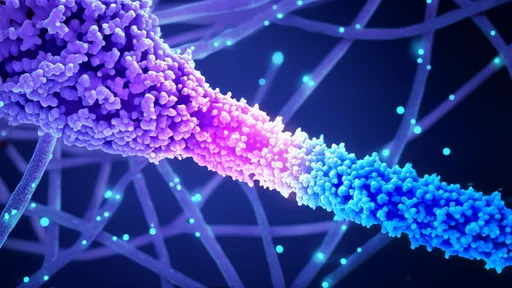
The journey from a passive astrocyte to an electrically active neuron is a profound metamorphosis. It is not merely a change in shape, from a star to a more elongated form with dendrites and an axon, but a complete molecular and functional overhaul. The reprogrammed cell must dismantle its astrocytic machinery, downregulating proteins like Glial Fibrillary Acidic Protein (GFAP), and simultaneously construct the complex apparatus of a neuron. This includes building ion channels to propagate action potentials, synthesizing neurotransmitters for communication, and forming synapses to integrate into existing neural networks. Incredibly, studies using advanced techniques like patch-clamp electrophysiology and calcium imaging have confirmed that these newly converted neurons, often dubbed induced neurons (iNs), do indeed fire action potentials and receive synaptic inputs, demonstrating their functional integration into the brain's circuitry.
The therapeutic implications of this technology are vast and transformative. Neurological conditions such as Alzheimer's disease, Parkinson's disease, and Huntington's disease are characterized by the devastating and selective loss of specific neuronal populations. Similarly, ischemic stroke kills neurons in the affected brain region, leaving behind a landscape populated largely by reactive astrocytes. The ability to convert these resident astrocytes into the very types of neurons that were lost presents a novel and powerful strategy for brain repair. Unlike transplanting external stem cells, which face hurdles of immune rejection, poor survival, and incorrect integration, in situ reprogramming uses the brain's own cells. The new neurons are generated exactly where they are needed, potentially reforming the local circuits that were disrupted by disease or injury. This approach could theoretically restore lost functions, such as memory, movement, or sensation, by rebuilding the neural hardware from within.
Despite the breathtaking promise, the path from laboratory bench to clinical bedside is fraught with formidable challenges. One of the primary hurdles is achieving precise control over the reprogramming process. The transcription factors used are powerful, and their expression must be carefully regulated to avoid off-target effects or incomplete conversion. The use of viruses as delivery vehicles, a common method in research, raises safety concerns for human therapy. Researchers are actively developing safer alternatives, such as non-integrating viruses, synthetic mRNAs, or small molecules that can mimic the effect of the transcription factors. Another critical challenge is guiding the fate of the converted cells. The brain contains hundreds of specialized neuronal subtypes. For effective therapy, we must not only create generic neurons but specific ones—dopaminergic neurons for Parkinson's or medium spiny neurons for Huntington's. Achieving this subtype-specific conversion requires an even deeper understanding of the genetic codes that define each neuronal class.
Furthermore, the environment of the diseased or injured brain is often hostile. Inflammation, the presence of inhibitory factors in the glial scar, and a lack of supportive growth signals could hinder the survival, maturation, and integration of the newly formed neurons. Successful therapy will likely require a combination of reprogramming and strategies to modulate the local environment to make it more permissive for neuronal growth and connectivity. The long-term stability and safety of these converted cells must also be thoroughly investigated to ensure they do not malfunction, degenerate, or, in worst-case scenarios, form connections that lead to adverse effects like epilepsy.
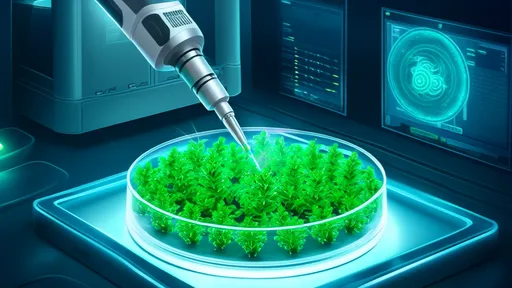
The field of astrocyte-to-neuron conversion is advancing at a breakneck pace, moving from proof-of-concept studies in petri dishes to demonstrating functional recovery in animal models of stroke, Parkinson's disease, and spinal cord injury. Each successful experiment adds another piece to the puzzle, bringing the medical community closer to a future where we can instruct the brain to heal itself. This research does more than just propose a new treatment; it fundamentally changes our relationship with our own biology. It suggests that our bodies contain hidden reservoirs of plasticity and that the tools for repair may already be within us, waiting for the right instructions. The humble astrocyte, once seen as a simple supporter, is now revealed as a potential knight in shining armor, holding the key to unlocking the brain's innate regenerative capabilities and illuminating a path toward curing the incurable.
By /Aug 27, 2025

By /Aug 27, 2025
By /Aug 27, 2025
By /Aug 27, 2025
By /Aug 27, 2025
By /Aug 27, 2025
By /Aug 27, 2025
By /Aug 27, 2025
By /Aug 27, 2025
By /Aug 27, 2025
By /Aug 27, 2025
By /Aug 27, 2025
By /Aug 27, 2025
By /Aug 27, 2025
By /Aug 27, 2025
By /Aug 27, 2025
By /Aug 27, 2025
By /Aug 27, 2025
By /Aug 27, 2025
By /Aug 27, 2025