In an era where digital data generation is exploding exponentially, the limitations of conventional storage media have become increasingly apparent. Magnetic tapes, hard drives, and even cloud servers face challenges in longevity, energy consumption, and physical space. Against this backdrop, a revolutionary approach has emerged from an unexpected source: biology. Scientists are now turning to DNA, the molecule that has preserved genetic information for millennia, as the next frontier in data storage.
The concept of DNA data storage isn't entirely new—researchers have been exploring its potential for over a decade. What sets recent breakthroughs apart is the development of encoding schemes that promise unprecedented stability at room temperature. Unlike current digital storage that requires climate-controlled environments and constant maintenance, DNA-based storage could potentially preserve information for thousands of years without degradation, even under ordinary conditions.
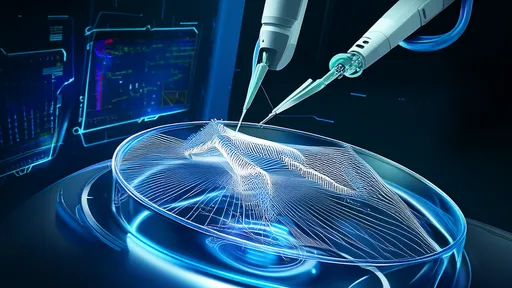
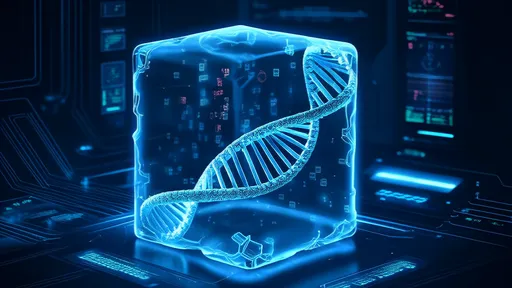
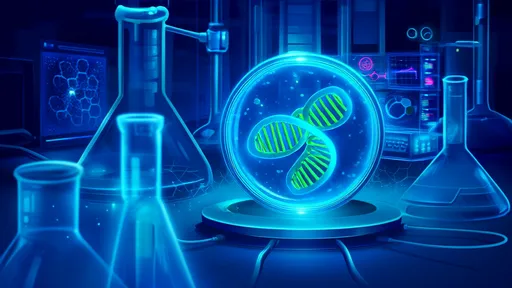
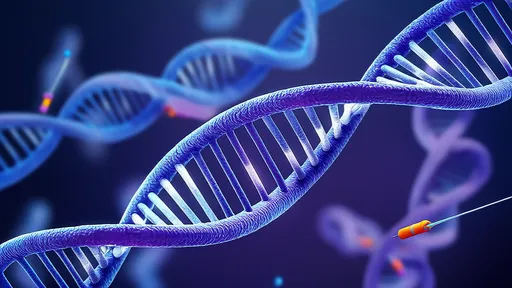
How does DNA data storage work? The process begins with translating digital information—traditionally stored as binary code (0s and 1s)—into the four-letter alphabet of DNA: adenine (A), thymine (T), cytosine (C), and guanine (G). Special algorithms encode the data into synthetic DNA sequences, which are then chemically synthesized and stored in liquid or solid form. To retrieve the information, researchers use DNA sequencing technology to read the sequences and decode them back into digital format.
The true breakthrough lies in the development of error-correction techniques and encoding schemes specifically designed for long-term preservation. Traditional digital storage suffers from "bit rot" and physical degradation, but DNA's inherent stability—evidenced by our ability to sequence genomes from ancient specimens—makes it an ideal candidate for archival storage. Recent experiments have demonstrated that properly encoded DNA can withstand temperature fluctuations, humidity, and even certain types of radiation that would destroy conventional media.
What makes the new encoding schemes remarkable is their resilience. Researchers have developed sophisticated algorithms that not only translate data but also build in redundancy and error correction directly into the DNA sequences. This means that even if some degradation occurs over centuries, the information can be fully recovered. Some approaches even mimic nature's strategy of storing multiple copies of crucial information across different molecules.
The implications for preserving human knowledge are profound. Cultural archives, historical records, scientific data, and even personal memories could be stored in a format that could outlast civilizations. Unlike current digital storage that becomes obsolete every few years as formats change, DNA sequencing technology is fundamental to biology and likely to remain accessible for the foreseeable future. This addresses what archivists call the "technology obsolescence" problem that plagues digital preservation.
From a practical perspective, DNA storage offers incredible density. All the world's data could theoretically be stored in a container the size of a few sugar cubes. The energy requirements for maintaining DNA archives are minimal compared to the massive server farms that currently consume enormous amounts of electricity for cooling and operation. This combination of density, longevity, and energy efficiency makes DNA storage particularly attractive for addressing the growing data storage crisis.
However, significant challenges remain before DNA storage becomes commercially viable. The costs of synthesis and sequencing, while dropping rapidly, are still prohibitive for widespread adoption. The speed of writing and reading data also lags far behind conventional storage. Current research focuses on developing more efficient synthesis methods and improving the throughput of reading technologies. Several companies and research institutions are racing to overcome these technical and economic barriers.
Beyond the technical challenges, there are important considerations regarding standardization and ethical implications. The field needs established standards for encoding, error correction, and physical storage formats to ensure interoperability and long-term accessibility. There are also questions about who controls this technology and how it might be regulated, particularly given its potential dual-use applications in biotechnology and information security.
Despite these challenges, progress continues at an accelerating pace. Major technology companies, government agencies, and research institutions are investing significantly in DNA data storage research. Recent demonstrations have successfully stored diverse content including text, images, videos, and even functional computer programs in DNA format. Each breakthrough brings us closer to realizing the vision of truly permanent information storage.
Looking forward, experts predict that DNA storage will initially find applications in archival preservation where longevity outweighs the need for rapid access. National archives, scientific databases, and cultural heritage institutions are likely early adopters. As the technology matures and costs decrease, we may see broader applications emerge, potentially even complementing conventional storage in hybrid systems that leverage the strengths of different technologies.
The development of room-temperature stable DNA encoding represents more than just a technical achievement—it represents a fundamental rethinking of how we preserve information. By learning from billions of years of biological evolution, scientists are creating storage solutions that could safeguard human knowledge against technological collapse, natural disasters, or simply the passage of time. In an age of digital fragility, this biological approach offers the promise of permanence.
As research continues, we stand at the threshold of a new era in information technology—one where the distinction between biological and digital continues to blur. The successful development of practical DNA data storage could ultimately change not only how we store information but how we think about preservation, legacy, and our relationship with the knowledge we create.
By /Aug 27, 2025
By /Aug 27, 2025
By /Aug 27, 2025
By /Aug 27, 2025
By /Aug 27, 2025
By /Aug 27, 2025
By /Aug 27, 2025
By /Aug 27, 2025
By /Aug 27, 2025
By /Aug 27, 2025
By /Aug 27, 2025
By /Aug 27, 2025
By /Aug 27, 2025
By /Aug 27, 2025

By /Aug 27, 2025
By /Aug 27, 2025
By /Aug 27, 2025
By /Aug 27, 2025
By /Aug 27, 2025
By /Aug 27, 2025