In the unforgiving expanse of Antarctica, where temperatures plummet to levels that would instantly flash-freeze most life, a remarkable biological defiance occurs. Microscopic algae not only survive but thrive within the sea ice, painting vast, slushy layers with hues of green and brown. For decades, scientists have been captivated by this paradox of life flourishing in a near-permanent deep freeze. The key to their survival lies not in mere resilience, but in a sophisticated molecular arsenal, chief among them being a special class of proteins known as antifreeze proteins (AFPs).
The journey to understand these proteins is a tale of scientific curiosity meeting cutting-edge technology. Early polar explorers noted the strange, unfrozen nature of water around certain marine organisms, but it wasn't until the latter half of the 20th century that researchers could pinpoint the cause. The discovery of antifreeze proteins in Antarctic fish in the 1960s was a watershed moment, redirecting scientific gaze towards the molecular adaptations of polar life. Researchers soon turned their attention to the base of the food web: the algae. Isolating these proteins from extremophiles like the ice algae Chlamydomonas and Fragilariopsis presented immense challenges, requiring expeditions into the Southern Ocean and novel culturing techniques in laboratories meant to simulate the brutal Antarctic conditions.
The primary function of these antifreeze proteins is brilliantly simple yet vitally important: they inhibit the growth and recrystallization of ice. In sub-zero environments, the formation of large, sharp ice crystals inside a cell is a death sentence, capable of piercing membranes and causing irreversible damage. Antarctic ice algae AFPs bind to the surface of nascent ice crystals, creating a curved surface that makes further growth thermodynamically unfavorable. This process, known as adsorption-inhibition, effectively lowers the freezing point of the organism's internal fluids without significantly altering its melting point, a phenomenon termed thermal hysteresis. For the algae, this means their cellular contents remain in a liquid state, allowing metabolic processes to continue even when encased in ice.
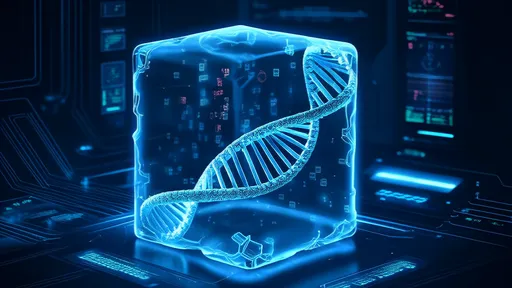
Understanding how they work necessitated a deep dive into what they look like. Determining the three-dimensional structure of a protein is a Herculean task, a puzzle solved primarily through two powerful techniques: X-ray crystallography and nuclear magnetic resonance (NMR) spectroscopy. For X-ray crystallography, scientists first face the formidable challenge of growing a high-quality protein crystal, a process that is notoriously difficult for AFPs due to their inherent interaction with water and ice. Once a suitable crystal is obtained, it is bombarded with X-rays, producing a diffraction pattern—a complex map of spots. Deciphering this pattern into a coherent atomic model requires immense computational power and sophisticated software. NMR spectroscopy, on the other hand, examines proteins in solution, using magnetic fields to determine the distances between atoms, which are then used to calculate the protein's structure. Each method has its strengths and limitations, and often, a combination of data from both is used to arrive at the most accurate model.
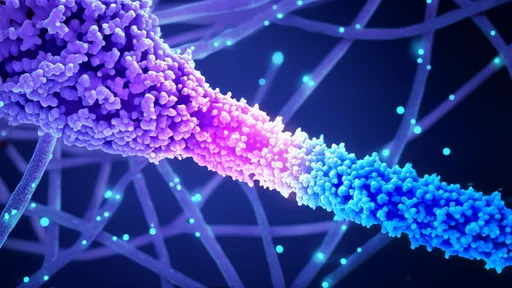
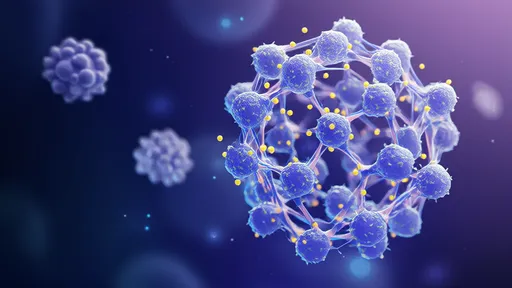
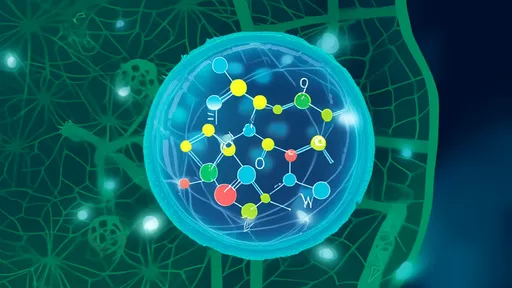
The structures revealed by these painstaking efforts are as elegant as they are effective. Unlike the globular shapes of many proteins, Antarctic ice algal AFPs often exhibit elongated, rod-like architectures. A common and highly studied structural motif is the solenoid beta-helix, a repetitive, coiled structure that presents a vast, flat surface ideal for making numerous contacts with the lattice of an ice crystal. This flat plane is not smooth; it is studded with a specific, regular array of amino acids, particularly threonine, that align perfectly with the water molecules in the ice crystal lattice. This complementarity is the secret to their binding strength. It's a precise molecular handshake, where the protein's surface mirrors the geometry of ice, allowing it to lock on and prevent the crystal from expanding. Some algal AFPs also exhibit modular or repeated domains, amplifying their ice-binding capacity.
The implications of fully deciphering these structures extend far beyond polar biology. This is fundamental science with profound practical potential. In the medical field, the ability to control ice crystal growth is a holy grail for cryopreservation. Organs and tissues destined for transplant could be stored at much lower temperatures without forming damaging ice, drastically extending their viable storage time and saving countless lives. In the food industry, AFPs could be used as natural additives to control ice crystal size in frozen products like ice cream, preventing the gritty, coarse texture that develops over time and improving overall quality. Even agriculture could benefit, with the potential to engineer frost-resistant crops by introducing genes for these algal proteins, protecting harvests from unexpected freezes and bolstering food security in a changing climate.
Despite the significant progress, the field is ripe with unanswered questions and new frontiers. The precise kinetics of ice binding—the exact moment a protein attaches to a crystal and the energy involved—remains a topic of active investigation. Advanced imaging techniques, like cryo-electron microscopy, are being deployed to visualize this interaction in near-atomic detail. Furthermore, the discovery of diverse AFP structures across different algal species suggests a complex evolutionary story. Researchers are now exploring the genes responsible for these proteins, tracing their origins and variations to understand how this incredible adaptation arose and spread. The environment itself is a laboratory; with polar regions warming at an alarming rate, scientists are also beginning to ask how rising temperatures might affect the production and efficacy of these vital proteins, and consequently, the entire polar ecosystem that depends on them.
The story of the Antarctic ice algae and their antifreeze proteins is a powerful testament to life's ingenuity. It demonstrates how evolution can craft exquisite molecular solutions to the most daunting environmental challenges. From the frozen deserts of the South Pole to the lab benches of biochemists around the world, the quest to unravel their secrets continues to drive innovation. It is a vivid reminder that sometimes, the smallest organisms hold the biggest keys to solving some of our largest problems, their survival strategies written in the intricate language of atomic structures, waiting to be read.
By /Aug 27, 2025

By /Aug 27, 2025
By /Aug 27, 2025

By /Aug 27, 2025
By /Aug 27, 2025
By /Aug 27, 2025
By /Aug 27, 2025
By /Aug 27, 2025
By /Aug 27, 2025
By /Aug 27, 2025
By /Aug 27, 2025
By /Aug 27, 2025

By /Aug 27, 2025
By /Aug 27, 2025

By /Aug 27, 2025
By /Aug 27, 2025
By /Aug 27, 2025
By /Aug 27, 2025
By /Aug 27, 2025
By /Aug 27, 2025