In a landmark achievement that could redefine material science and biomedical engineering, researchers have successfully developed a scalable method for synthesizing spider silk proteins artificially. This breakthrough, achieved after decades of global research efforts, promises to unlock the vast potential of one of nature's most remarkable materials for commercial and medical applications.
Spider silk has long fascinated scientists for its extraordinary combination of strength, flexibility, and biodegradability. Pound for pound, it is stronger than steel and tougher than Kevlar, yet it is produced by spiders at ambient temperatures and pressures using nothing more than amino acids and water. However, harvesting silk directly from spiders has proven impractical due to their territorial nature and low yield. Previous attempts to produce synthetic spider silk have struggled with replicating the complex protein structures and achieving economic viability at scale.
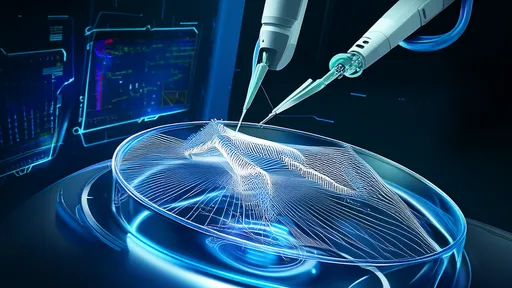
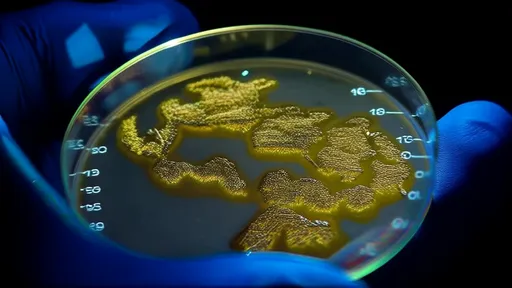
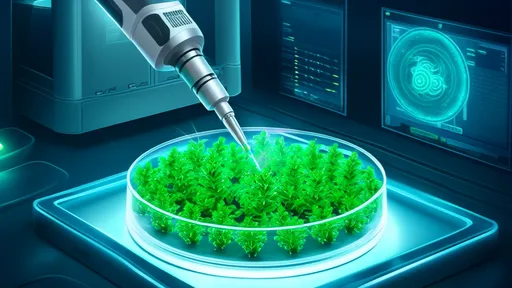
The newly developed工艺 hinges on a novel bioreactor system using genetically modified microorganisms. Unlike earlier approaches that relied on mammalian cells or transgenic plants, this method utilizes a proprietary strain of bacteria optimized for high-yield protein expression. The researchers engineered these microbes to produce spidroins—the key protein components of spider silk—with molecular weights and sequences that closely mimic those found in natural dragline silk, the strongest variety produced by spiders.
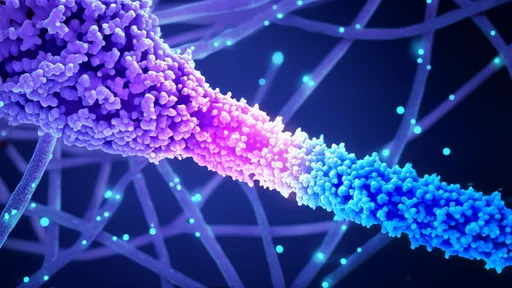
What sets this breakthrough apart is the precision in protein folding and alignment during synthesis. Natural spider silk derives its mechanical properties from the highly organized arrangement of beta-sheet crystals within an amorphous protein matrix. The artificial process successfully replicates this hierarchical structure through a carefully controlled precipitation and spinning process that aligns the proteins into fibers with comparable tensile strength and elasticity to their natural counterparts.
Perhaps most significantly, the research team has overcome the scalability challenges that have plagued previous attempts. Their fermentation process achieves protein concentrations exceeding previous methods by an order of magnitude, while the downstream processing has been optimized for continuous operation rather than batch production. This makes commercial-scale manufacturing not just theoretically possible but economically feasible for the first time.
The implications of this advancement are profound across multiple industries. In biomedical applications, spider silk's biocompatibility and gradual biodegradability make it ideal for surgical sutures, tissue engineering scaffolds, and drug delivery systems. The synthetic version could provide a consistent, contaminant-free material for these sensitive applications. Early tests have shown promising results in supporting cell growth and causing minimal immune response.
Beyond medicine, the material could revolutionize textiles and composites. Imagine lightweight body armor that offers better protection than current materials, or athletic wear that combines unprecedented strength with breathability. The automotive and aerospace industries could benefit from stronger, lighter composite materials that reduce weight and improve fuel efficiency. Even electronics might incorporate spider silk substrates for flexible, biodegradable devices.
Environmental considerations add another dimension to this breakthrough. Unlike many synthetic materials derived from petroleum, spider silk proteins are produced from renewable resources and are fully biodegradable. The production process itself operates at room temperature and pressure, requiring significantly less energy than conventional synthetic fiber manufacturing. This could represent a major step toward sustainable material production across multiple sectors.
While the research represents a quantum leap forward, challenges remain before widespread commercialization. The team is currently working on optimizing the mechanical properties to match the very best natural spider silks, particularly in terms of energy absorption and fatigue resistance. Long-term stability studies and regulatory approvals for medical applications will also take time. However, the researchers have already filed multiple patents and are collaborating with industrial partners to bring products to market within the next three to five years.
This achievement stands as a testament to the power of interdisciplinary research, combining insights from genetics, biochemistry, materials science, and engineering. It demonstrates how careful observation of nature's solutions, coupled with innovative manufacturing approaches, can lead to technological breakthroughs with far-reaching implications. As the team continues to refine their process, we may be witnessing the dawn of a new era in advanced materials—one inspired by one of nature's most humble yet extraordinary architects.
By /Aug 27, 2025

By /Aug 27, 2025
By /Aug 27, 2025
By /Aug 27, 2025
By /Aug 27, 2025
By /Aug 27, 2025
By /Aug 27, 2025
By /Aug 27, 2025

By /Aug 27, 2025
By /Aug 27, 2025
By /Aug 27, 2025

By /Aug 27, 2025

By /Aug 27, 2025
By /Aug 27, 2025
By /Aug 27, 2025
By /Aug 27, 2025
By /Aug 27, 2025

By /Aug 27, 2025
By /Aug 27, 2025
By /Aug 27, 2025